
Outlawed Jamaat-ud-Dawah chief Hafiz Mohammed Saeed demanded "stern punishment" according to Pakistan's constitution for US official Raymond Davis, arrested for shooting and killing two men.

The Union Home Ministry has designated 23 individuals based in Pakistan and Pakistan-occupied Jammu and Kashmir (PoJK) as terrorists under the Unlawful Activities (Prevention) Act (UAPA) for their involvement in infiltration, recruitment, logistics, financing, and operational planning targeting India.
Pakistan has not received any "solid evidence" against outlawed Jamaat-ud-Dawah chief Hafiz Mohammed Saeed from India so far, Foreign Minister Shah Mahmood Qureshi said on Friday, as New Delhi presented a fresh dossier on the26/11 carnage to Islamabad.
Jamaat ud-Dawa chief and Lashkar-e-Tayiba founder Hafiz Mohammed Saeed cannot be prosecuted for involvement in the Mumbai terror attacks without 'concrete evidence' against him, Pakistan's top law official said on Wednesday. "The government has the evidence provided by the United Nations Security Council that can only keep Saeed behind bars for a certain period of time under the Maintenance of Public Order law," said Attorney General Latif Khosa.
The release of banned outfit Jamaat-Ud-Dawah Chief Hafiz Mohammed Saeed by a Lahore Court today may embolden the Lashker-e-Toiba cadres operating in India who may themselves plan a strike or do it on the orders of their master, security experts here feel.
Pakistan on Thursday said that the information provided so far by India on the Mumbai attacks was not enough for it to take legal action against outlawed Jamaat-ud-Dawa chief Hafiz Mohammed Saeed. "It needs to be underlined that the dossiers and information received from India apropos Saeed are not really enough ... to proceed legally as is being expected," Foreign Office spokesman Abdul Basit told a weekly news briefing in Islamabad.

Notwithstanding the dossiers of information handed over by India, Pakistan's Inter Services Intelligence believes that there is nothing to implicate Hafiz Mohammed Saeed, a key accused in the Mumbai terror attack case, a media report said in Islamabad on Wednesday, quoting an ISI official.Jamaat-ud-Dawah chief Saeed, who was also the founder of terror outfit Lashkar-e-Tayiba, was let off in July by a Pakistani court.
Jamaat-ud_Dawa chief Hafiz Mohammed Saeed, designated as a terrorist by the United Nations Security Council in the wake of the Mumbai attacks, and other militant leaders detained by Pakistani authorities cannot be tried in the absence of solid evidence against them, Defence Minister Chaudhry Ahmed Mukhtar said on Wednesday. The government had recently launched a crackdown against militant groups, including the JuD.
The Pakistan government on Wednesday asked the Supreme Court to adjourn for a week, the hearing of petitions against the release of Jamaat ud Daawa chief Hafiz Mohammed Saeed, a key accused in the Mumbai attacks, even as Punjab province's move to withdraw its plea was stalled due to federal intervention.

A United Nations Security Council panel has issued a 'revised' letter removing the term 'sahib' from the name of Mumbai terror attack mastermind and JuD chief Hafiz Saeed, saying it regrets the mistake after India objected to the use of the salutation.
Stephen Tankel, author of the book Storming the World Stage: The Story of Lashkar-e-Taiba, says that the bounty announcement validates India's repeated assertions that the LeT is a dangerous group and that Saeed plays a strategic role in guiding it.
Official sources said the USD 10 million US bounty for Saeed necessitated the late night meeting of the top civil and military leadership at the Governor's House in Lahore
Pakistani authorities have extended by two months the detention of Jamaat-ud-Dawah chief Hafiz Mohammed Saeed and seven other activists of the front organisation of Lashkar-e-Tayiba, blamed for the Mumbai terrorist attacks.A spokesman for the Punjab government told reporters that the province's home department had on Saturday extended the detention of Saeed and the seven other JuD leaders by 60 days.Saeed and other Jamaat leaders were placed under house arrest for a month.
India has provided "insufficient information" against Lashkar-e-Tayiba founder Hafiz Mohammed Saeed and Pakistan could take action only on the basis of evidence that stands the test of courts, Interior Minister Rehman Malik claimed on Sunday.
The complete dossier containing evidence linking Pakistan-based terrorists to the Mumbai attacks was handed over by the Home Ministry to the Prime Minister's Office to help it raise the issue with the Pakistani delegation, official sources said.
Pakistani authorities have detained more than 60 leaders of the outlawed Jamaat-ud-Dawah though no evidence linking them to the Mumbai attacks has been found so far, the interior ministry said on Friday. Intelligence and security agencies have detained the Jamaat leaders, including its chief Hafiz Mohammed Saeed, as part of the ongoing crackdown on the group designated as a terrorist outfit by the United Nations Security Council. Nothing incriminating has been found.
Stepping up operations against terror groups, Pakistani security forces on Friday sealed more offices of the Lashker-e-Taiba's front organisation Jamaat-ud-Dawah across the country and reportedly rounded up dozens of its activists.The clampdown, which started after sundown on Thursday with the group's founder Hafiz Mohammed Saeed being put under house arrest, continued today with JuD offices locked up in other parts of the country.
Lashkar-e-Tayiba operations chief Zakiur Rehman Lakhvi and six others, being tried in an anti-terror court for their involvement in the Mumbai attacks, were arrested by the Pakistani authorities with the 'sole purpose of pleasing' India, Jamat-ud-Dawa chief Hafiz Mohammed Saeed has claimed."The truth is that the (Pakistan) government arrested various leaders who endorse Jihad in Kashmir and did so for the sole purpose of pleasing India," he said.
India has asked Pakistan to take strict action against Lashkar-e-Tayiba founder Hafiz Mohammed Saeed, underworld dons Dawood Ibrahim and Tiger Memon and terror leader Maulana Masood Azhar, who are named in a list of 20 wanted terrorists handed over to Islamabad by New Delhi.

Special public prosecutor in the 26/11-terror attacks case, Ujjwal Nikam, on Friday demanded that the Pakistani court should conduct an open trial in the case, slated to begin there on Saturday.
Jamaat-ud-Dawah, the frontal organisation of the Lashkar-e-Tayiba, which is blamed for the Mumbai attacks, has written to the United Nations claiming that it was not associated with the Al-Qaeda and Taliban and that the Security Council's sanctions on it were 'unjustified'.
The sanctions committee of the Council had circulated a note to its members that the United States, backed by Britain and France, had tried to add JuD chief Hafiz Mohammed Saeed to the list of individuals and organisations connected to terrorism last May, but was blocked by China, according to a note circulated in the UNSC on Wednesday.
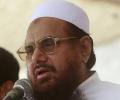
Saeed, the leader of the Jaamat-ud-Dawah, also called for more violence against India.
Pakistani Interior Minister Rehman Malik has claimed that India has not provided any "credible evidence" against 26/11 mastermind and LeT chief Hafiz Saeed. Prasanna D Zore reports.

The United States is not taking at face value Pakistan's actions against terrorists outfits.

A source in the Imran Khan government told PTI that the Punjab police are waiting a go-ahead from the "top" to lay hand on Saeed.

Seeking to wriggle out of the FATF's grey list, Pakistan has imposed tough financial sanctions on 88 banned terror groups and their leaders, including Hafiz Saeed, Masood Azhar and Dawood Ibrahim, by ordering the seizure of all of their properties and freezing of bank accounts, a media report said.

'If India is already involved in helping the insurgents in Baluchistan and Karachi, as Pakistan says, it is but one step for New Delhi to bring Dawood or Hafiz Saeed into its sights,' says Amulya Ganguli.

The ED claimed that Shah 'only received donations in cash from locals'.
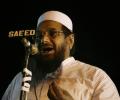
The fatwa was issued against the Jamaat-ud-Dawah chief by Mufti Mohammed Saleem Barelvi, an Islamic seminary in Bareilly in Uttar Pradesh.
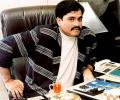
Syed Firdaus Ashraf/Rediff.com presents the names of 10 global terrorists who, according to United Nations Security Council, are operating against India from Pakistan.
Arrested Pakistani national Mohammad Omar Madni is a top aide of Jamaat-ud-Dawa chief Hafiz Mohd Saeed, a prime accused in the terror attack on Mumbai. "He is a close aide of Hafiz Saeed and has been operating from Nepal for the past one year," a senior Delhi police official said. Madni has been a close aide of Saeed since 2000 and was involved in recruiting cadres for the Lashkar-e-Tayiba outfit, he said.
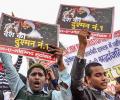
They are the first to be declared terrorists under the new anti-law, a home ministry official said.
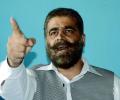
The NIA is also probing all angles of the funding of separatist leaders.
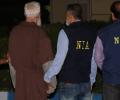
Tahawwur Hussain Rana, a key accused in the 26/11 Mumbai terror attacks, was brought to India on Thursday after being "successfully extradited " from the US, the National Investigation Agency (NIA) said. The 64-year-old Canadian citizen of Pakistani origin landed in Delhi in a special plane on Thursday evening, ending days of speculation of when and how he will be extradited, officials said. The NIA said in a statement that it had secured the successful extradition after years of sustained and concerted efforts to bring to justice the key conspirator behind the 2008 mayhem that claimed 166 lives. Rana is accused of conspiring with David Coleman Headley alias Daood Gilani, and operatives of designated terrorist organisations Lashkar-e-Taiba (LeT) and Harkat-ul-Jihadi Islami (HUJI) along with other Pakistan-based co-conspirators, to carry out the the three-day terror siege of India's financial capital.

The Financial Action Task Force (FATF) on Friday retained Pakistan on its 'grey list' for failing to check money laundering, leading to terror financing, and asked Islamabad to investigate and prosecute senior leaders and commanders of United Nations-designated terror groups, including Hafiz Saeed and Masood Azhar.
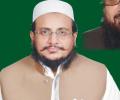
Hafiz Talha Saeed is a senior leader of the LeT and is the head of the cleric wing of the terrorist organisation.
This is the first time the Pakistan army has publicly backed the arrest of India-focused jihadis.

In its short history, Pakistan has become a geography synonymous with terror.
Rauf Azhar, born in 1974 in Pakistan, had been sanctioned by the United States in December 2010.
